Walk through any unforgettable landscape and you will certainly notice something past "great plants." There is a silent order to it. Colors feel intentional, appearances play off each other, and the forms of beds, trees, and paths pull your eye along a clear tale. That underlying reasoning is not a crash. It originates from 3 core style tools: color, structure, and form.
Whether you are working with business landscape design for a hectic office park or fine-tuning a tiny residential landscape design task, these three concepts do even more of the hefty lifting than any type of individual plant option. Get them right and even modest plant product looks innovative. Neglect them and you can invest a lot of cash on landscape building and construction and still wind up with something that feels scattered or flat.
I have seen both results on genuine tasks, occasionally on opposite sides of the very same street.
Why shade, texture, and kind issue more than plant lists
Plant listings fit. Customers like to see names and pictures. Developers delight in setting up combinations. The problem is that plant schemes commonly change with patterns, neighborhood supply, or climate shifts, while the means we see and experience space remains consistent.
Color, appearance, and type give you a secure structure that outlives style. They tell you how to combine plants, rock, and frameworks to make sure that the room really feels intentional and systematic, despite the actual species.
In business landscape design, this is specifically vital. You may be collaborating with maintenance staffs of differing skill levels, limited plant accessibility, or strict brand name guidelines. A solid structure of kinds and structures can keep a residential or commercial property looking composed also if particular plants fail or get swapped.
In yard landscaping for homes, these exact same principles safeguard you from the classic "one of whatever at the nursery" trap. Instead of ordering impulse acquisitions, you can ask a simple inquiry: does this plant's shade, structure, and kind reinforce or deteriorate the design?
Put candidly, you can rescue a typical plant scheme with superb use these three principles. The opposite is extremely seldom true.
Understanding shade: greater than selecting "quite" flowers
Color is normally the very first point individuals notice, and the most convenient point to misuse. Excessive selection turns into aesthetic noise. Insufficient and the landscape looks boring or institutional.
Color technique starts prior to you pick plants. It starts with context: style, paving, bordering vegetation, environment, and even the common weather condition when individuals in fact utilize the space.
Context establishes the color constraints
On a current workplace school task, the building had an amazing grey frontage with reflective glass. The customer at first wanted "great deals of bright shades to stimulate the entrance." If we had actually followed that essentially, we would certainly have ended up with a disorderly mix of reds, oranges, purples, and yellows combating against the building.
Instead, we leaned into great colors near to the glass - blues, violets, blue-greens - after that made use of warm accents at vital centerpieces, such as the major doors. The cool tones soothed the large facade, while tiny ruptureds of warm shade signaled where to go.
For residential landscaping, existing materials typically dominate the color tale. Brick, rock, siding, and roofing color all act as component of the combination. A red brick residence already has a solid warm existence, so saturating the front yard with just as strong red and orange flowers can really feel hefty. It commonly functions much better to bring in cooler eco-friendlies, blues, and soft whites to stabilize the heat of the building.
Basic shade approaches that work in actual landscapes
Design concept provides several possible schemes, however a handful of approaches show up repeatedly in effective landscapes.
First, think about a comparable palette, where you utilize colors that sit alongside each other on the color wheel, such as blue, blue-violet, and violet. These mixes really feel calm and cohesive. They are frequently an excellent fit for business universities, health care centers, or exclusive gardens where individuals concern decompress.
Second, experiment with corresponding accents, where one color rests opposite an additional on the wheel: blue and orange, yellow and violet, red and green. In landscapes, pure matches at complete strength can look rough, specifically under solid sun. It generally works best to let one color control in softer tones, then generate the enhance in tiny, concentrated doses. Think about a primarily green and white planting punctuated by a few crimson focal plants at an entry, as opposed to red spread everywhere.
Third, collaborate with tonal or monochromatic plans, utilizing primarily variants of one shade household. An all-green planting can be exceptionally abundant if you lean on structure and form. White-flowering systems can feel luminous at sundown or in shaded courtyards. These strategies typically match official entryways, high-end property projects, and rooms where the style currently has solid color.
Seasonal timing of color
Designers occasionally discuss shade as if it were fixed, yet genuine landscapes transform with the year. On one commercial website, a client whined that the growing "never flowered" despite the fact that the plant list consisted of numerous flowering varieties. A fast go to in springtime revealed the problem: whatever peaked in a solitary four-week window. The remainder of the year really felt flat.
When you think of color, map it throughout a minimum of three seasons. In cool environments, you might focus on spring, summer, and fall. In warm climates, the schedule may look various, with a completely dry season and damp season pattern. The secret is to avoid focusing all solid color in one brief duration unless the yard has a details function, such as a springtime bulb display.
Finally, keep in mind that foliage color does extra long-term job than flowers. Flowers are an incentive. Leaves and stems carry the area for months. Blue-gray foliage, burgundy leaves, variegation, and gold tones can all serve as structural shade that connects beds landscaping pasadena together also when nothing is practically "in blossom."
Texture: the silent foundation of planting design
Texture talks to the size, density, and visual weight of fallen leaves, stems, and blossoms. It is what makes a bed feel rich or ventilated, fine or vibrant, soft or architectural.
In individual, people respond strongly to texture, commonly more than they understand. I as soon as upgraded a residential backyard where the client urged she liked "blossoms and shade." When we strolled her current planting, what genuinely troubled her was exactly how "spiky" and "rough" it felt. The color was actually fine. The concern was a dominance of crude, upright textures defending attention.
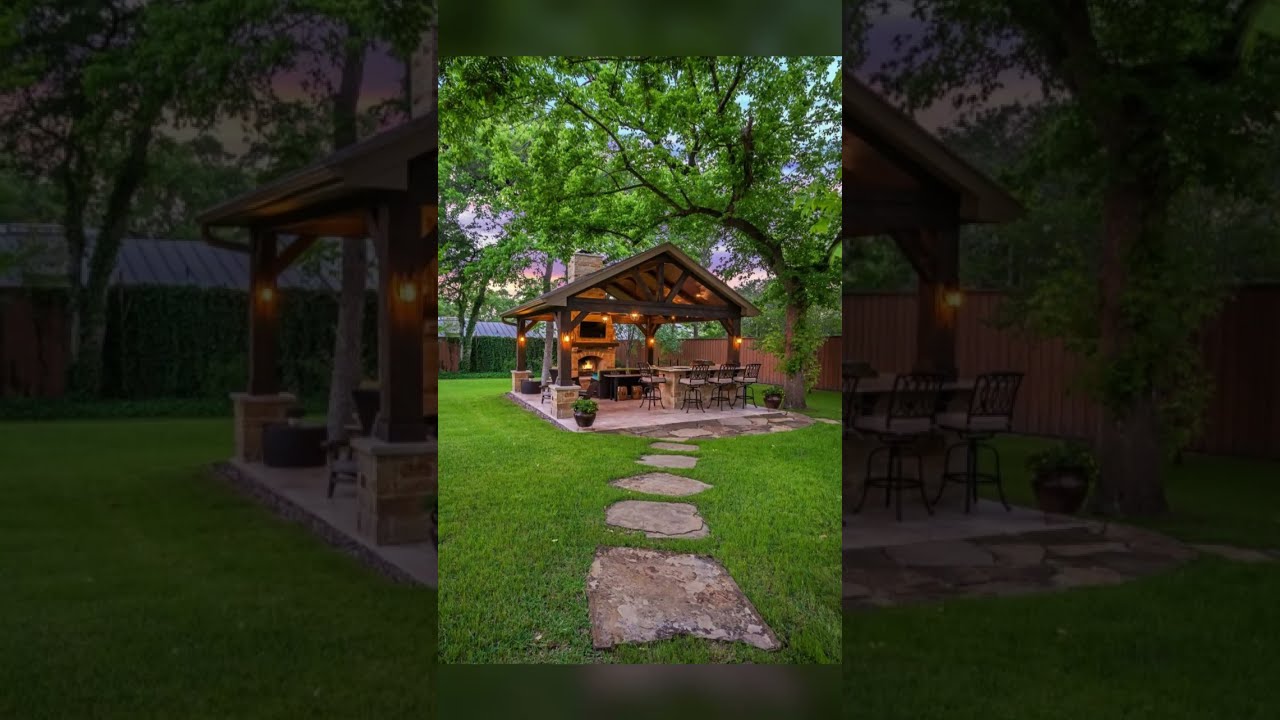
Fine, tool, and coarse texture
A functional way to manage texture is to think in 3 wide bands.
Fine appearance comes from plants with tiny fallen leaves, thin blades, or fragile branching, such as numerous ornamental turfs, ferns, and small-leaved hedges. These plants produce a sense of motion and agility. Made use of alone, they can really feel as well slender or poor, specifically in big commercial landscapes. Combined with bolder neighbors, they soften edges and add sophistication.
Medium appearance is where most plants drop, so it creates the baseline. Several perennials and hedges sit here. When you place a lot of medium-textured plants with each other, the result can really feel sloppy, like a paragraph without any punctuation. It is not that anything is incorrect, it is that nothing stands out.
Coarse appearance involves big leaves, thick stems, or strong architectural describes. Think of hostas, large yuccas, big exotic vegetation, or strong architectural shrubs. In business landscape design, developers typically count on coarse-textured plants near building corners and entryways since they stand up visually at a distance. Used everywhere, they dominate and can make smaller areas feel cramped.
Balancing appearance at various viewing distances
Distance modifications just how we regard texture. A plant that reads as finely textured up close may obscure right into a smooth eco-friendly mass from across a parking area. This matters in business setups, where lots of sights are long. It additionally matters ahead lawn residential landscape design, where individuals usually see the garden initially from the road or sidewalk.
As a guideline, coarser structures belong in key structural functions that need to check out from afar: near entries, anchor factors of beds, end of axial views. Finer structures can play closer to courses, seating locations, or windows where individuals experience the detail at arm's length.
Edge conditions are another area where appearance makes its maintain. A patio area surrounded by only coarse shrubs can really feel heavy and boxed in. Presenting medium and fine structures at the limit, such as grasses or perennials, lightens the shift from hardscape to planting.
Form: the framework that holds everything together
Form is the three-dimensional shape of plants and constructed aspects. It might be the dispersing silhouette of a shade tree, the tight ball of a clipped hedge, or the upright column of an Italian cypress. Kinds produce the rhythm of a landscape. They guide movement, structure sights, and establish hierarchy.
You can consider form at two ranges: the type commercial landscape maintenance contracts of individual plants and the kind of the structure as a whole.
Plant types and their roles
Most plant brochures team hedges and trees by kind for a factor. Upright, columnar, mounded, spreading, weeping each of these kinds has an all-natural habits in space.
Upright or columnar kinds draw the eye upward and can suggest procedure or structure. They are useful for flanking an access, marking a path modification, or punctuating a long exterior. In slim commercial growing beds, columnar trees are frequently the only method to present vertical range without clogging sidewalks or disrupting signage.
Mounded forms feel calm and secure. Numerous foundation shrubs fall under this classification. Utilized in collection, they develop wide strokes that read well in both domestic and industrial landscapes. They additionally blend well with a lot of building styles.
Spreading or ground-hugging types are effective along slopes, maintaining wall surfaces, and the sides of drives. They aesthetically secure frameworks to the website. An usual mistake is to blend too many various spreading plants in one bed. The outcome usually looks irregular or disorderly. Big, easy sweeps of a couple of groundcovers normally look more deliberate.
Weeping or plunging types can feel romantic or significant, yet they are very easy to overuse. On a business website, a single crying tree near a main entryway can produce a memorable moment. A row of them along a parking lot edge usually reads as fussy and is susceptible to trimming disasters.
Overall composition and spatial form
Zooming out, the composition itself has type. Bedlines curve or remain directly. Courses converge at angles or move in arcs. Trees produce above canopies or leave open sky.
On one residential job, the customers had a tiny, boxy yard. Their very first reaction was to soften every edge with contours. The result, in early illustrations, felt unusually uneasy, with great deals of little lumps and indentations that offered no objective. We wound up keeping a strong rectangle-shaped grass as the major form, after that utilized planting beds with calm, easy curves along 2 sides. The contrast between the geometric center and the relaxed borders offered the room character without aesthetic clutter.
On bigger commercial or school websites, clear architectural types assist people understand just how to relocate through the space. Aligned trees can suggest instructions. Strong, consistent bed shapes can make wayfinding simpler. The secret is to stay clear of approximate types that combat each other. A mix of tight circles, jagged angles, and straying lines in one job typically looks unexpected, not creative.
How shade, appearance, and form work together
Treating shade, appearance, and form as different subjects works for learning, but real landscape design depends upon how they interact.
Imagine a growing of only fine-textured yards, done in soft eco-friendly, with mounded forms repeating along a straight path. It might feel calm, yet from a distance the whole point might obscure right into an unclear strip of environment-friendly. Introduce a few coarse-textured shrubs with darker vegetation at regular intervals and you suddenly have rhythm, deepness, and more legibility.
On an industrial plaza, I as soon as saw a failed attempt at corporate branding through plants alone. The business shades were intense red and strong yellow, so the developer made use of every red and yellow blooming plant they can discover. Appearance and type were second thoughts. In summertime, the beds shrieked with clashing tones and had no real structure. When half those plants went out of flower, nothing of passion remained.
A more durable technique would have utilized type and structure to establish the scene: maybe bold, mounded evergreens as supports, medium-textured perennials for mass, and fine yards to soften sides. Blossoms in the brand colors might after that appear as seasonal accents in containers or little focal groupings, not as the whole basis of the plan.
In residential landscaping, analytical usually comes down to this integration. A customer might say, "It just looks messy," or "It feels boring." Usually, the repair is not a new plant list but a rebalancing of type and structure, then a disciplined use of shade for emphasis as opposed to as wallpaper.
Reading a site via these three lenses
Before any individual talks about specific plants, it assists to stroll the website and review it in terms of shade, texture, and kind. A straightforward area checklist maintains you from leaping also swiftly right into plant catalogs.
Here is one means to structure that initially assessment:
- Note dominant existing shades in structures, paving, fencings, and neighboring vegetation. Identify where people stand, sit, drive, and walk, and from which angles they see the landscape. Observe existing textures: are they mostly difficult and smooth (concrete, steel, glass) or already softened by vegetation? Sketch the major types on website: developing masses, existing trees, significant bed shapes, and circulation routes. Mark the essential centerpieces where more powerful color or bolder kind would be most efficient, such as entrances, junctions, or framed views.
Spending even 30 minutes on this sort of monitoring typically exposes why an area stops working or succeeds. On a retail project, we realized the existing landscape design felt "cold" not due to shade, but since every little thing on website was hard, level, and rectilinear: glass, metal, asphalt, smooth stone. Introducing solid blossom color would have been a plaster. What the site needed was a warmer structure and softer forms in the planting for the architecture.
Adapting the concepts to different project types
The core concepts remain the same whether you are working with yard landscape design for a townhouse, a suv office complex, or a health care campus. What changes are the constraints and priorities.
Commercial landscape design priorities
Commercial customers typically prioritize sturdiness, brand expression, upkeep predictability, and responsibility issues like sight lines and journey dangers. Shade usually needs to be legible from a range, structure has to withstand harsher microclimates (wind tunnels, reflected warmth), and type can not obstruct signs or develop hiding spots.
In this context, type and appearance do the majority of the long-term work. Strong architectural kinds trees, architectural hedges, clear bed shapes support a constant look also when details plants transform as a result of availability or maintenance. Color becomes a layer ahead: seasonal display screens near entrances, brand tones in containers, or refined mirrors of corporate shades in foliage.
Residential landscape design nuances
Home landscapes bring more psychological weight and personal preference. Customers may want love, nostalgia, or a sense of sanctuary. They additionally often tend to interact with the garden at closer variety: from a kitchen area home window, along a slim side lawn, next to a terrace.
Here, fine structure and nuanced color changes end up being more valuable. A planting that looks level in a picture could be deeply satisfying face to face if it reveals layers of information: small blossoms, changing foliage colors, and subtle contrasts in fallen leave dimension. Types can be softer, but still require adequate framework to keep the area from liquifying into a formless mass.
For lots of domestic websites, a basic strategy jobs: establish a clear backbone of form with a few well-chosen trees and shrubs, after that let shade and appearance play more freely within that structure, specifically near seats and access points.
Common errors and exactly how to avoid them
After strolling numerous websites, particular patterns of failure turn up consistently. A lot of them trace back to misusing color, structure, or kind, typically with the most effective intentions.
Here are some of one of the most frequent pitfalls:
- Too several colors fighting for focus, especially in high-traffic, visually active locations like street frontages or retail entries. Overreliance on flowers for rate of interest, without any framework of type and vegetation to lug the yard with off-peak seasons. An assortment of unconnected plant types in one bed, such as weeping specimens next to rigid columns beside reduced mounds, without clear rhythm or repetition. Overuse of crude textures in small areas, making outdoor patios and sidewalks feel confined or "closed in." Ignoring just how views alter with range, bring about carefully comprehensive plantings that appear like a blur from the viewpoint most individuals in fact have.
Being knowledgeable about these patterns lets you find them during style and long before installation. On the building and construction side, it likewise assists service providers recognize which components are flexible and which are important to keep the layout intent. You can substitute one purple blossom for another, however if you switch a columnar tree for a wide, spreading out kind, you have actually transformed more than a plant name. You have actually transformed the underlying structure of the composition.
From paper to developed landscape: coordinating style and construction
Translating concept right into a developed task is where several layouts live or pass away. A landscape strategy hefty on nuanced color and structure choices, but light on clear instructions for plant type and placement, leaves too much to opportunity in the field.
Good landscape construction files and guidance make the concepts concrete. They define not simply varieties and quantities, but likewise spacing, astonishing, and alignment that shield the desired structure and form.
For circumstances, a strategy that relies upon fine-textured lawns to develop a soft veil around strong architectural hedges should make sure those turfs are set up densely sufficient and in the ideal pattern to in fact check out as a mass. If the specialist decreases quantities or spaces them also much apart, the appearance connection crumbles. In a similar way, columns of trees that are intended to align along a sightline requirement exact design in the field, not rough approximation.
On the maintenance side, connecting the reason behind specific choices helps staffs avoid well-meaning errors. Several business sites shed their form and structure relationships to overpruning. Great grasses get hacked flat, columnar trees get topped, and bushes implied to have all-natural forms are pushed into arbitrary balls since "that is just how we always trim." When maintenance groups understand that a plant's form is not design yet part of the spatial structure, they are more likely to preserve it.
Thoughtful use of shade, structure, and kind offers both garden landscape design and massive business jobs their backbone. The particular plants and products will certainly constantly vary by region, budget, and preference. What withstands is the method these 3 devices shape just how people feel and move in an area. If you can check out a website with these lenses and design with them consciously, you get much more control over the last experience than any kind of plant checklist alone can offer.